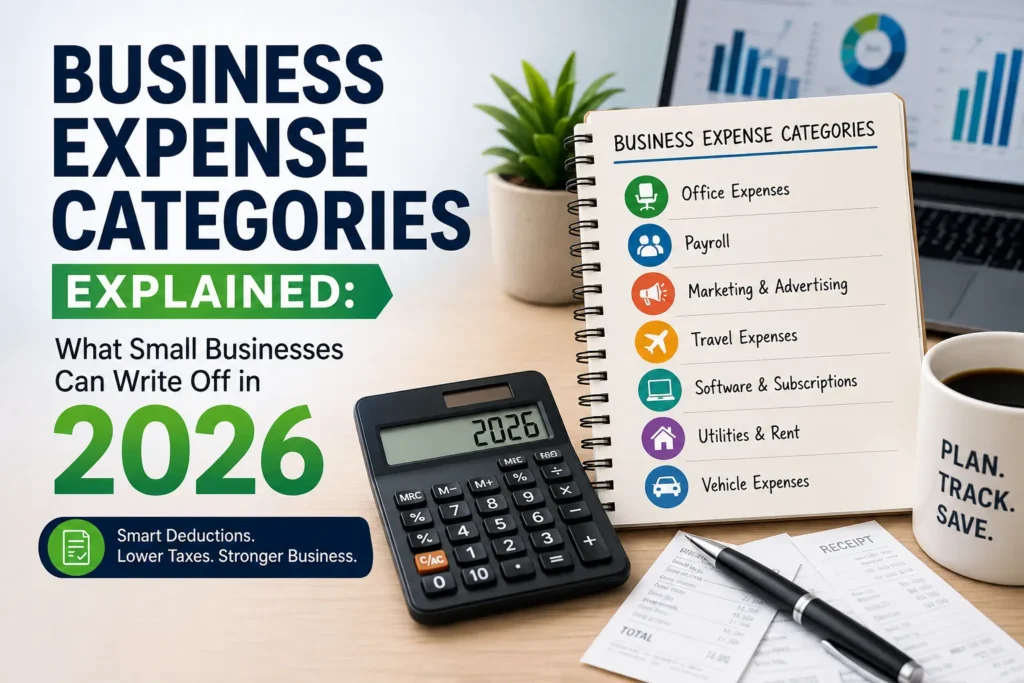
Business expense management is something a lot of small business owners hear about every year during tax season, but many still do not fully understand how much they actually matter.
The truth is, businesses spend money every single day without realizing many of those costs can help lower taxes legally. Things like software, internet bills, marketing, office supplies, employee payments, and even business travel may qualify as deductions when they are tracked properly.
The problem usually starts when expenses are scattered everywhere. Some receipts stay in emails, some stay in bank statements, and some completely disappear by the time taxes come around. That is where proper expense tracking changes everything.
Once expenses are organized into the right list of business expenses for small business, bookkeeping becomes easier, taxes become less stressful, and businesses get a much clearer picture of where money is going.
First Things First — What Are Business Expense Categories?
Think of business expense categories as simple folders for business spending.
Instead of throwing every expense into one giant list, businesses separate spending into groups.
For Example:
| Category | What Goes Inside |
| Marketing | Ads, SEO, branding |
| Office Expenses | Desks, paper, printers |
| Payroll | Salaries and contractor payments |
| Travel | Hotels, flights, fuel |
| Utilities | Internet and electricity |
| Software | Business tools and subscriptions |
This makes it easier to track spending and understand what can be written off later.
And honestly, it also saves a lot of headaches during tax season.
Why Small Businesses Need to Track Expenses Properly
A lot of businesses wait until the end of the year to organize expenses. By then, things become messy very quickly.
Receipts go missing. Subscriptions get forgotten. Payments are hard to explain.
That usually means missed deductions.
Keeping expenses organized throughout the year helps businesses:
- Reduce taxable income
- Stay prepared for taxes
- Avoid bookkeeping stress
- Understand monthly spending better
- Keep cleaner financial records
It is not really about making accounting complicated. It is more about staying organized enough to avoid problems later.
The Most Common Business Expense Categories
Some expenses show up in almost every business no matter the industry.
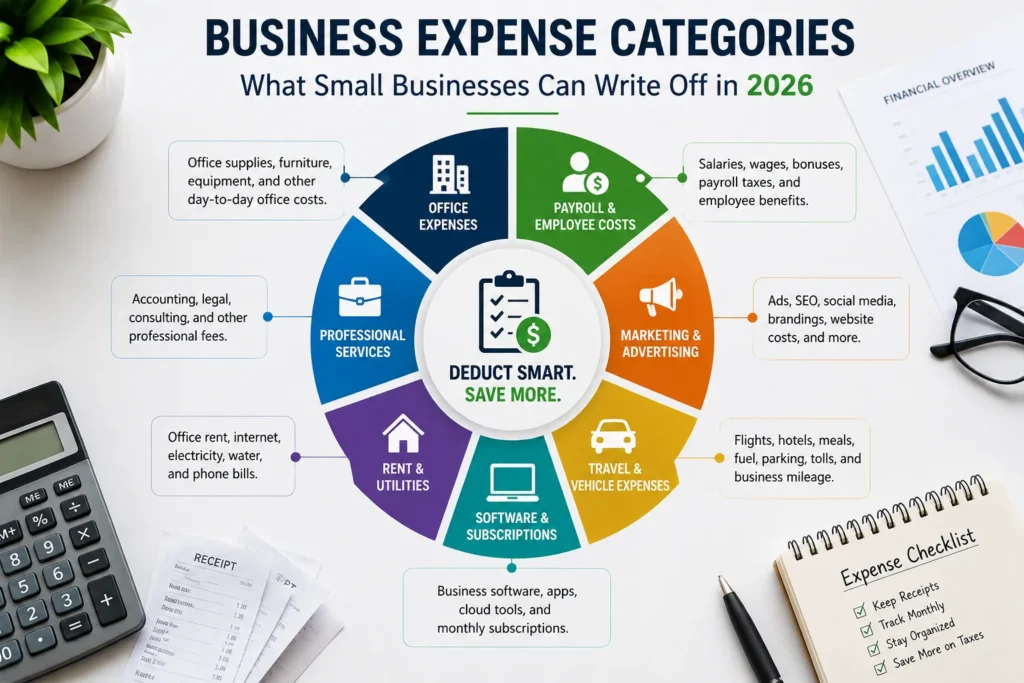
Here are the biggest business expense categories small businesses usually deduct in 2026.
Office Expenses
Every business spends money on office-related items.
That may include:
- Computers
- Office desks
- Chairs
- Printer ink
- Storage cabinets
- Paper and supplies
Even businesses working from home may qualify for some office deductions.
Small purchases may not seem important at first, but over an entire year they add up fast.
Rent and Utility Bills
Businesses paying for office space can usually deduct rent expenses.
Utilities may also qualify, including:
- Internet
- Electricity
- Water
- Business phone bills
For home offices, only the business-use portion usually counts.
Employee and Contractor Payments
For growing businesses, payroll quickly becomes one of the largest business expense categories.
This includes:
- Employee salaries
- Bonuses
- Freelancer payments
- Payroll taxes
- Team benefits
Good payroll records matter a lot because missing information here can create tax problems later.
Marketing and Advertising
Most businesses spend heavily on marketing now, especially online.
The good thing is that many marketing expenses are deductible.
That includes:
- Facebook ads
- SEO services
- Website design
- Branding
- Email marketing software
- Business cards
If the expense helps bring in customers, there is a strong chance it qualifies.
Vehicle and Travel Expenses
Businesses using vehicles for work may deduct certain travel costs.
That may include:
- Fuel
- Parking
- Repairs
- Tolls
- Business mileage
Business travel may also cover:
- Flights
- Hotels
- Conferences
- Business meals
The important thing here is keeping records properly. Saving receipts and mileage logs makes a huge difference later.
How to Keep Track of Business Expenses Without Making It Difficult
This is probably one of the biggest mistakes small businesses make early on.
When personal and business spending get mixed together, bookkeeping becomes confusing and tax filing gets harder.
A separate business account keeps things much cleaner.
Save Receipts Digitally
Paper receipts disappear all the time.
Most businesses now use apps that scan receipts directly from a phone and store them automatically.
That alone saves a lot of stress later.
Use Accounting Software
Accounting expert and tools make expense tracking much easier now than it used to be.
Most software can:
- Categorize expenses automatically
- Connect business bank accounts
- Track invoices
- Create reports
- Store receipts
This helps businesses save time and avoid manual errors.
Review Expenses Every Month
Waiting until tax season to review expenses usually creates problems.
Monthly reviews help businesses:
- Catch missing transactions
- Control spending
- Stay organized
- Avoid bookkeeping surprises
Even spending twenty minutes a month reviewing expenses helps a lot.
Home Office Deductions Still Matter in 2026
A lot of remote businesses and freelancers still search for business expenses for taxes related to home offices.
If part of the home is used only for business purposes, certain deductions may qualify.
| Home Office Expense | Deductible |
| Internet | Partial |
| Electricity | Partial |
| Rent | Partial |
| Office furniture | Full |
This continues to help remote businesses lower taxable income legally.
Tax Deductible Business Expenses Businesses Commonly Miss
Many businesses focus only on larger expenses and forget smaller deductions completely.
But smaller costs add up faster than most people think.
Some commonly missed tax deductible business expenses include:
- Bank fees
- Shipping costs
- Online subscriptions
- Software renewals
- Business memberships
- Training courses
- Loan interest
Over a full year, these smaller deductions can save businesses a noticeable amount.
A Simple Small Business Tax Deductions Checklist
Having a small business tax deductions checklist makes tax season much easier because businesses already know what to review.
Common deductions include:
- Office supplies
- Payroll expenses
- Marketing costs
- Insurance
- Internet bills
- Software subscriptions
- Website hosting
- Travel expenses
- Vehicle costs
- Professional services
Checking these regularly helps businesses avoid missing deductions later.
How to Deduct Business Expenses Properly
Understanding how to deduct business expenses matters just as much as knowing what qualifies.
A few simple habits make a huge difference.
Keep Records for Everything
Always keep receipts, invoices, and proof of payment.
Categorize Expenses Immediately
Adding purchases into the correct business expense categories right away saves a lot of time later.
Avoid Mixing Personal Purchases
Separate spending keeps financial records much cleaner.
Work With a Tax Professional
Tax rules change often, so professional advice helps businesses avoid mistakes and maximize deductions safely.
Frequently Asked Questions
What are business expense categories?
Business expense categories are groups used to organize business spending like payroll, office supplies, marketing, software, and travel expenses.
Why are business expense categories important?
They help businesses track spending properly, reduce taxes legally, and make bookkeeping and tax filing much easier throughout the year.
Can home office expenses be deducted?
Yes, businesses may deduct home office expenses if the space is used regularly and only for business-related work.
What business expenses are usually deductible?
Common deductible expenses include payroll, office supplies, software, marketing, travel, utilities, and professional services.
How do businesses keep track of expenses?
Most businesses use accounting software, digital receipts, spreadsheets, and separate business bank accounts to stay organized.
Can software subscriptions be written off?
Yes, business-related software subscriptions are generally deductible when they are used for daily operations or growth.
What expenses do businesses commonly forget?
Businesses often miss deductions like bank fees, memberships, online subscriptions, shipping costs, and training courses.
How often should business expenses be reviewed?
Reviewing expenses monthly helps businesses stay organized and avoid problems during tax season later.
Can travel expenses be deducted?
Yes, business-related travel expenses like flights, hotels, meals, and parking may qualify when documented properly.
Should business and personal expenses stay separate?
Yes, separating business and personal spending makes bookkeeping cleaner and helps avoid accounting and tax issues later.