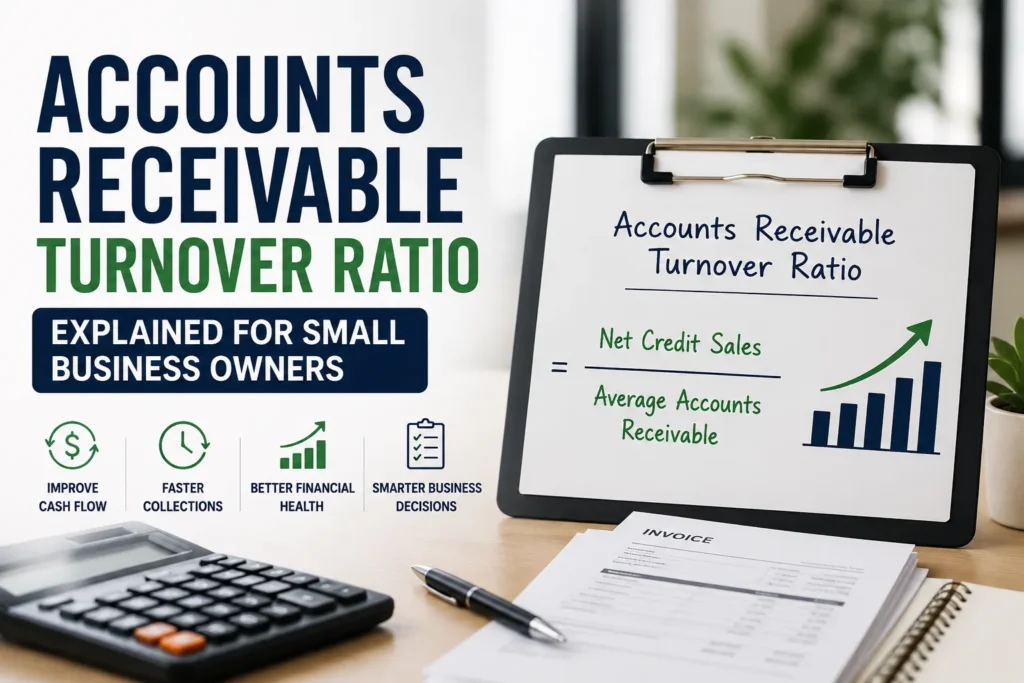
Accounts receivable turnover ratio is one of those business things that sounds complicated, but in real life it is actually very simple. It is just about one basic question: how fast are you getting your money back after you sell something on credit?
Because in business, making a sale is not the final step. Getting paid is the real step that keeps everything running. If customers are paying quickly, everything feels smooth. If customers are delaying payments, even good sales start feeling stressful. That is exactly where it comes in.
It quietly shows you how healthy your business cash flow really is.
Accounts Receivable Turnover Ratio
The receivable turnover ratio is basically your collection speed.
You sell on credit, you wait, and then you collect money. This ratio tells you how many times this whole cycle completes in a year.
So when people search for accounts receivable turnover, what they really want to know is very simple:
“Is my money coming back fast or is it stuck?”
If it is coming back fast, your business feels strong. If it is stuck, your business starts feeling pressure even if sales look good.
Why This Ratio Matters in Real Business Life
This accounts receivable turnover ratio matters because profit on paper does not pay bills. Cash does.
You still need money for:
- Salaries
- Rent
- Suppliers
- Daily expenses
That is why this ratio is deeply connected with working capital management.
In simple speaking words:
- Fast turnover means money is flowing back quickly
- Slow turnover means money is stuck outside your business
And when money is stuck, everything slows down in real life.
Receivables Turnover Formula Explained
The receivables turnover formula is:
Net Credit Sales ÷ Average Accounts Receivable
But let’s make it even simpler:
- Net credit sales = how much you sold where customers didn’t pay immediately
- Average receivables = how much money is still pending with customers
So basically you are asking:
“How much I sold vs how much is still unpaid?”
That is all the receivable turnover ratio is trying to tell you.
How to Calculate Accounts Receivable Turnover Ratio Easily
If you want to understand how to calculate receivable turnover ratio, just think in a very natural flow:
- First, add up your credit sales
- Remove returns and discounts to get net credit sales
- Find average money stuck with customers
- Divide sales by receivables
That final number is your receivable turnover ratio.
Example:
If you sold 250,000 on credit and 50,000 is still unpaid on average, your ratio is 5.
That means your business collects money about 5 times a year.
This is also commonly used to calculate receivables turnover or even a r turnover in simple business talk.
Simple Real Life Example
Imagine you run a small business.
You do work, send invoices, and wait for payment.
- You sell 400,000 on credit
- Customers still owe you 100,000 on average
So:
400,000 ÷ 100,000 = 4
Your accounts receivable turnover ratio is 4.
In speaking words, it simply means your money comes back in cycles four times a year.

Link With Working Capital Management
This accounts receivable turnover ratio is very closely tied to working capital management because it controls your actual usable cash.
When money comes in fast:
- You can pay bills easily
- You don’t feel pressure
- Business moves smoothly
When money comes in slow:
- Cash gets stuck
- You start waiting on payments
- You may even borrow money
So in real life, this ratio decides how relaxed or stressed your business feels financially.
How It Impacts Business Cash Flow
The biggest effect is always on business cash flow.
Because cash flow is not about how much you sold, it is about how fast you collected it.
If the accounts receivable turnover ratio is strong:
- Money keeps coming in regularly
- Business stays stable
- You can plan ahead easily
If it is weak:
- Payments are delayed
- Bills pile up
- Stress increases
So this ratio is basically your cash movement indicator.
How to Improve Accounts Receivable Turnover Ratio
If you want to improve your receivable turnover ratio, it is mostly about discipline and follow-up. Effective accounts receivable management can help businesses collect payments faster and maintain healthy cash flow.
Simple things make a big difference:
- Tell customers payment terms clearly from day one
- Send invoices immediately, not late
- Follow up again and again without hesitation
- Don’t let invoices sit unpaid for too long
- Encourage early payments when possible
When you do these things regularly, your receivable turnover ratio naturally improves and your business cash flow becomes much healthier.
Common Reasons It Gets Weak
Most businesses don’t have a bad product or low sales. They just have slow collections.
Common issues are:
- No proper follow-up system
- Giving credit too easily
- Not tracking overdue payments
- Late invoicing
These small habits quietly damage your accounts receivable turnover ratio over time.
Conclusion:
At the end of the day, the accounts receivable turnover ratio is just a simple reality check. It tells you: “How fast is my business actually getting paid?”
Fast payments = smooth business life
Slow payments = financial pressure
Once you understand this properly, you naturally start improving working capital management, and your business cash flow becomes more stable and predictable.
Frequently Asked Questions
What is accounts receivable turnover ratio?
It is a way to check how fast your customers are paying you after buying on credit. It shows how quickly unpaid bills turn into real cash in your account.
Why is receivable turnover ratio important in business?
Because it tells you whether your money is coming back on time or getting stuck. Even if sales are good, slow payments can create serious cash flow problems.
What does a high receivable turnover ratio mean?
It means customers are paying quickly and your business is collecting money efficiently. Cash is flowing back into the business without delay.
What does a low ratio mean?
It means customers are taking longer to pay and money is stuck in receivables. This can make daily expenses harder to manage.
How is receivables turnover formula used in real life?
It is used to measure how efficiently a business is collecting payments by comparing credit sales with unpaid customer balances.
How do I calculate receivables turnover easily?
You divide net credit sales by average accounts receivable to find out how many times money is collected in a year.
How does this ratio affect working capital management?
It directly affects how much cash is available for daily use. Faster collection improves working capital, while slow collection reduces it.
How does it impact business cash flow in reality?
It decides how quickly money enters your business after sales. Faster cash flow means stability, slower cash flow creates pressure.
How to improve accounts receivable turnover ratio in simple steps?
Send invoices on time, follow up regularly, and set clear payment rules so customers don’t delay payments.
Why do many small businesses struggle with this ratio?
Because they give credit too easily, don’t follow up properly, and often delay invoicing, which slows down collections.