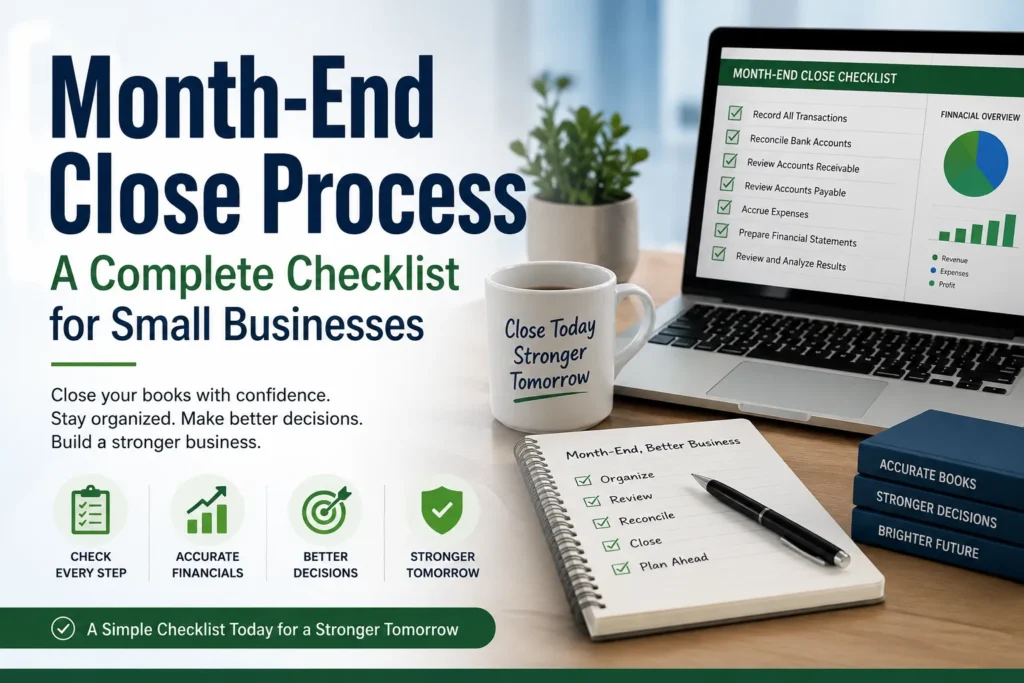
The month-end close is one of those tasks that small business owners dread. It feels tedious. It feels complicated. But it does not have to be The month end close checklist is simply a set of steps to make sure your books are accurate before moving on to the next month. Once you have a system, it becomes routine. And routine is what saves you from the end-of-year scramble.
What Is the Month-End Close Process?
The month end close process is the set of procedures you follow at the end of each month to finalize your accounting records . The goal is to make sure all transactions are recorded, accounts are reconciled, and financial statements are ready for review.
The month end close is not just about bookkeeping. It is about knowing where your business stands. Are you profitable? Is cash flow healthy? Are there issues you need to address?
The month-end close process ensures your financial data is accurate and reliable. Without it, you are making decisions based on incomplete information.
Why the Month-End Close Matters
Many small business owners skip the month end closing procedures because they are busy. But that is a mistake. Here is why the accounting month end close process matters:
- Accurate financial statements. Lenders, investors, and tax authorities expect accurate numbers. The month end close accounting process ensures your records are correct.
- Better decision-making. When you have accurate data, you can make informed decisions about spending, hiring, and growth.
- Early problem detection. The month end closing procedures help you spot issues early. Missed payments. Billing errors. Unrecognized expenses.
- Smooth tax filing. When your books are clean month to month, tax season is significantly less stressful.
A Step-by-Step Month-End Close Checklist
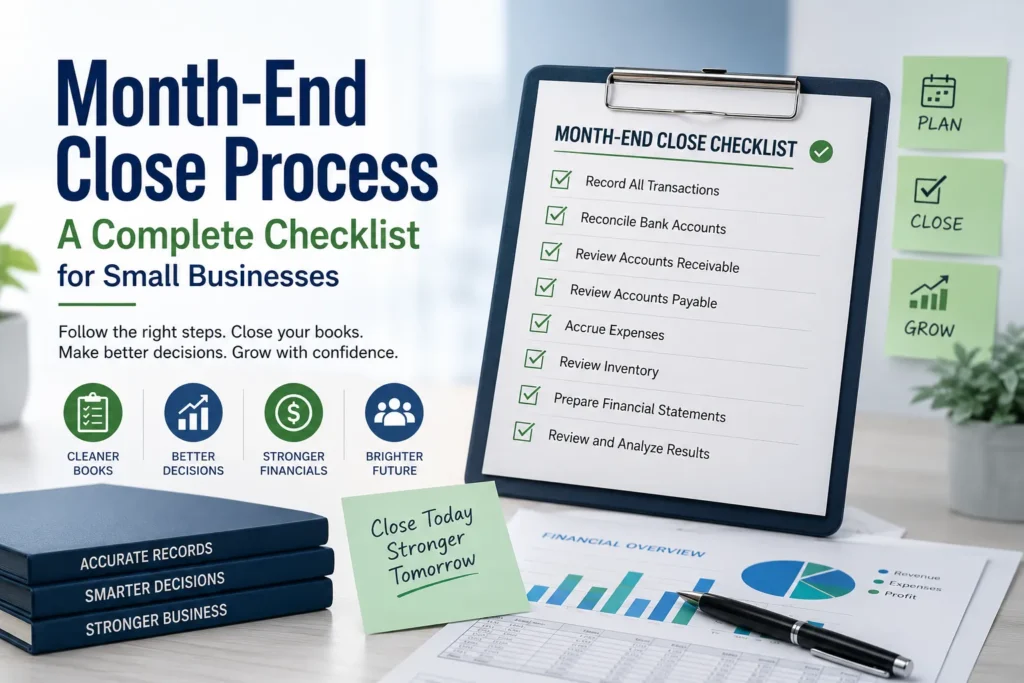
1. Record All Transactions
Record every transaction that takes place during the month. Include sales, expenses, and all other financial activities. If you use accounting software, it will automatically record many of these transactions. However, you should still review your records to identify and correct any missing or inaccurate entries.
2. Reconcile Bank and Credit Card Accounts
One of the most important steps in the month end close checklist is reconciling your bank accounts and credit cards. This ensures that your recorded transactions match the actual money moving in and out of your accounts.
Bank reconciliation services can help if this becomes overwhelming. But for most small businesses, the process is straightforward. You simply match your records to the bank statement and investigate any discrepancies.
3. Review Accounts Receivable
Check which customers owe you money. Review outstanding invoices. Follow up on overdue payments. The month end close process is the perfect time to identify customers who are consistently late.
4. Review Accounts Payable
Check what you owe to vendors. Verify that bills have been entered correctly and are scheduled for payment.
5. Record Depreciation and Amortization
If you have fixed assets, you need to record depreciation each month. This is a non-cash expense, but it affects your financial statements.
6. Accrue Expenses
Some expenses are incurred in one month but paid in the next. Salaries, interest, and utilities are common examples. These need to be recorded as accrued expenses during the month end closing procedures.
7. Review Inventory
If you sell physical products, you need to account for inventory. This may involve a physical count or review of inventory reports.
8. Prepare Financial Statements
Once all adjustments are made, run your financial statements. The income statement shows profitability. The balance sheet shows financial position. The cash flow statement shows cash movement.
9. Review and Analyze
Look at your financial statements for month end close checklist.. Compared to previous months. Look for trends. Identify variances from budget.
The Benefits of Professional Bookkeeping Services
Many small businesses use bookkeeping services for small businesses to handle the month end close accounting . This frees up time and ensures accuracy.
Bookkeeping services for small businesses typically include:
– Monthly bank reconciliation
– Financial statement preparation
– Budget tracking
– Accounts receivable and payable management
Even if you handle the close yourself, consider professional help at year-end.
Common Month-End Close Mistakes
Waiting too long to start. The longer you wait, the harder it is to reconstruct transactions. Skipping the monthly close because you are “too busy.” This creates a much bigger problem later.
Failing to reconcile accounts. If your bank balance and your book balance do not match, there is an error that needs to be fixed. Rushing through the close. Month end close checklist error in the close process can carry over to future periods.
Conclusion
The month end close checklist is not optional. It is how you keep your books accurate and your business healthy. It does not have to be complicated. Follow the steps consistently, and it becomes routine. Your future self will thank you.
Frequently Asked Questions
What is the month-end close process?
The month end close checklist is the set of procedures you follow at the end of each month to finalize your accounting records, ensuring all transactions are recorded and accounts are reconciled.
Why is the month-end close important for small businesses?
It ensures accurate financial statements, helps with decision-making, and makes tax filing easier. Without it, you are operating with incomplete data.
What is a month end close checklist?
A month end close checklist is a list of tasks to complete at the end of each month, including recording transactions, reconciling accounts, and reviewing financial statements.
How long should the month-end close take?
For a small business, the close should take 3 to 5 business days. Larger organizations may take up to 10 days.
Can I outsource month-end close?
Yes. Many businesses use bookkeeping services for small businesses to handle the close process.
What is an accrual in accounting?
An accrual is a recording of an expense or revenue that has been incurred but not yet paid or received.
What financial statements are prepared during the month-end close?
The income statement, balance sheet, and cash flow statement are typically prepared.
What happens if I skip the month-end close?
Your books become inaccurate, leading to poor decisions and tax filing issues.