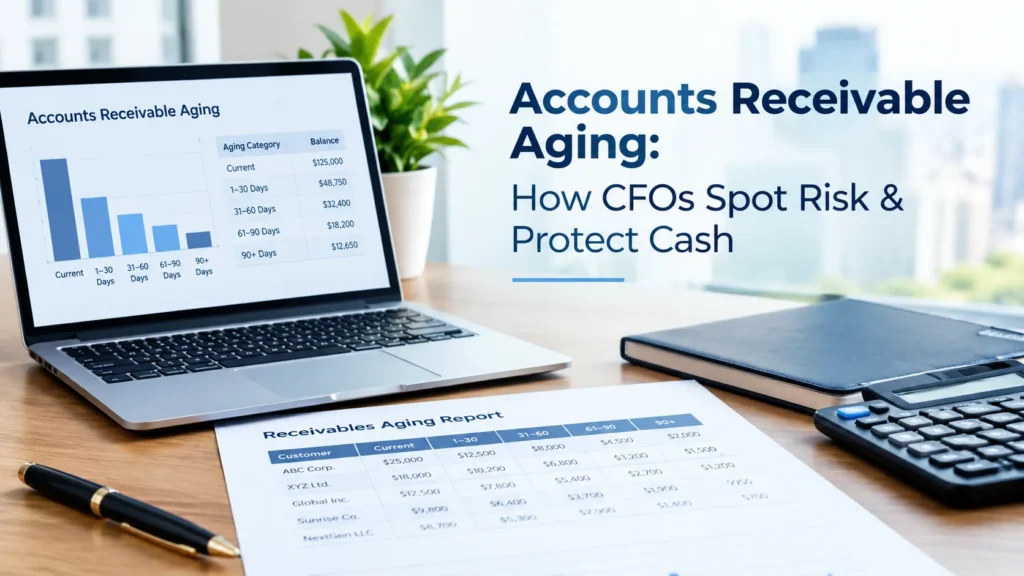
When unpaid invoices start putting pressure on cash flow, accounts receivable aging gives CFOs a clearer picture of where the risk is coming from. A business can have strong sales and still face financial pressure when customers are slow to pay.
If overdue balances are not tracked closely, collection problems can go unnoticed until they begin affecting working capital and everyday operations.
This article looks at how CFOs use aging reports to identify risky accounts, prioritize collections, recognize payment trends, and improve cash-flow forecasting.
What is Accounts Receivable Aging and Why Does It Matter?
An accounts receivable aging report organizes unpaid invoices by how long they have been outstanding. Common categories include current, 1–30 days, 31–60 days, 61–90 days, and 90+ days.
Aging of accounts receivable helps finance teams see which invoices are current, which are overdue, and which balances may need further investigation. By reviewing these categories, finance leaders can better understand collection risk and estimate when cash is likely to be received.
Why Do CFOs Analyze the Aging of Accounts Receivable?
CFOs rely on accounts receivable aging to gauge risk because cash is needed for payroll, suppliers, operating costs, debt payments, and growth. Generating revenue does not necessarily mean that the money has already reached the bank.
Widespread late payments, high overdue balances, customer concentration, unresolved disputes, and weaker cash flow forecasting can all be warning signs.
How an Accounts Receivable Aging Schedule Works
The aging schedule usually includes the following columns: Customer, Invoices, Due, Aging Category, and Outstanding. It helps finance teams distinguish between healthy receivables and balances that require attention.
| Category | Possible Signal | Action |
| Current | Normal | Monitor |
| 1–30 days | Early delay | Follow up |
| 31–60 days | Rising risk | Prioritize |
| 61–90 days | Significant delay | Escalate |
| 90+ days | High concern | Investigate |
The accounts receivable aging schedule becomes more useful when compared with previous periods.
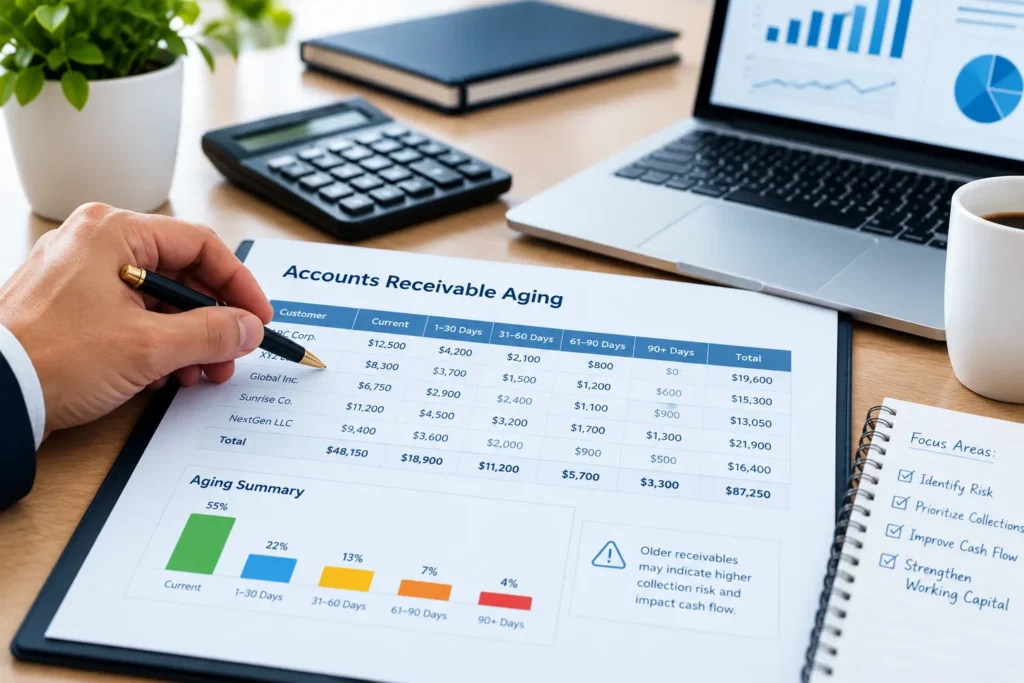
Accounts Receivable Aging Analysis: From Report to Action
An accounts receivable aging analysis should provide more than a total of overdue invoices. CFOs also need to understand why balances are late and how those delays could affect cash flow.
A Practical Review Process
Review: Identify the focus of balances.
Flag: Check for large or overdue invoices.
Check: See history of payments and repeat delays.
Resolve: Solve billing or documentation issues.
Prioritize: Match the collection effort to risk and age.
For example, an invoice 31- 60 days late would be considered in the 31- 60 days late bin. Multiple delays should be investigated.
Understanding the Aging of Accounts Receivable Formula
The aging of accounts receivable calculation is based on the amount of time an invoice has been outstanding or past due.
Days outstanding = Review date − Invoice date
For overdue reporting, a business may use:
Days past due = Review date − Due date
Use the same method each period for reliable comparisons.
Using the Accounts Receivable Aging Method to Protect Cash
The accounts receivable aging method helps businesses decide where to focus their collection efforts.
- Make timely and accurate invoices.
- Establish payment guidelines.
- Follow-up around the due date.
- Resolve disputes quickly.
- Pay attention to trends rather than totals.
Aged Receivables Analysis: Mistakes to Avoid
Typical pitfalls include handling all overdue invoices the same way, not addressing any disputes, checking reports only occasionally, and only examining the aggregate of all outstanding invoices.
If two companies have the same number of receivables, but one has a large number of current invoices and the other has a large number of older invoices, they might have very different cash risks.
Conclusion
By providing a clear picture of delayed cash and collection risk, accounts receivable aging gives CFOs a clear view. Teams can use the age of the invoice to help identify any problem accounts, prioritise follow-up action, and aid in cash-flow planning activities.
Regular trend analysis can enable businesses to act sooner rather than later in response to any payment issues and make informed working-capital decisions. The first step is to look at your aging report and determine which are the balances that should be addressed first.
Frequently Asked Questions
What is receivables aging?
It sorts unpaid invoices according to their length of overdue, simplifying the management and prioritisation of overdue balances.
Why do CFOs analyze the aging of accounts receivable?
They evaluate the likelihood of collection, working capital, and anticipated cash receipts, and look for common cash flow issues.
What is an accounts receivable aging schedule?
It includes customer balances, invoices, due dates, and the aging categories to help finance teams identify accounts to be handled.
What is receivables aging analysis?
It analyzes aging information to determine trends and risks associated with aging collections that could impact follow-ups, credit decisions, and forecasting.
What are common aging categories?
Common time periods include current, 1-30 days, 31-60 days, 61-90 days, and 90+ days, but these can be customized according to your business’s payment terms.
What is the aging of accounts receivable formula?
The calculation of elapsed days is a simple job using the review date and invoice date. Due date may be used in lieu of overdue reports.
Why are 90+ day receivables concerning?
They have not been paid for a long time and may need to be investigated for disputes, delays with customers, or collection problems.
How can businesses reduce aged receivables?
When it comes to balances that are getting increasingly overdue, accurate invoices, clear terms, timely reminders, and timely dispute resolution can be helpful.
How is aging different from total receivables?
Total Receivables represents the amount owed by customers, and aging provides more detail on the length of time the balances have been outstanding.
How often should an aging schedule be reviewed?
The frequency of reviews should be consistent with the number of transactions and cash flow requirements. Regular reviews enable teams to react more quickly to outstanding balances.