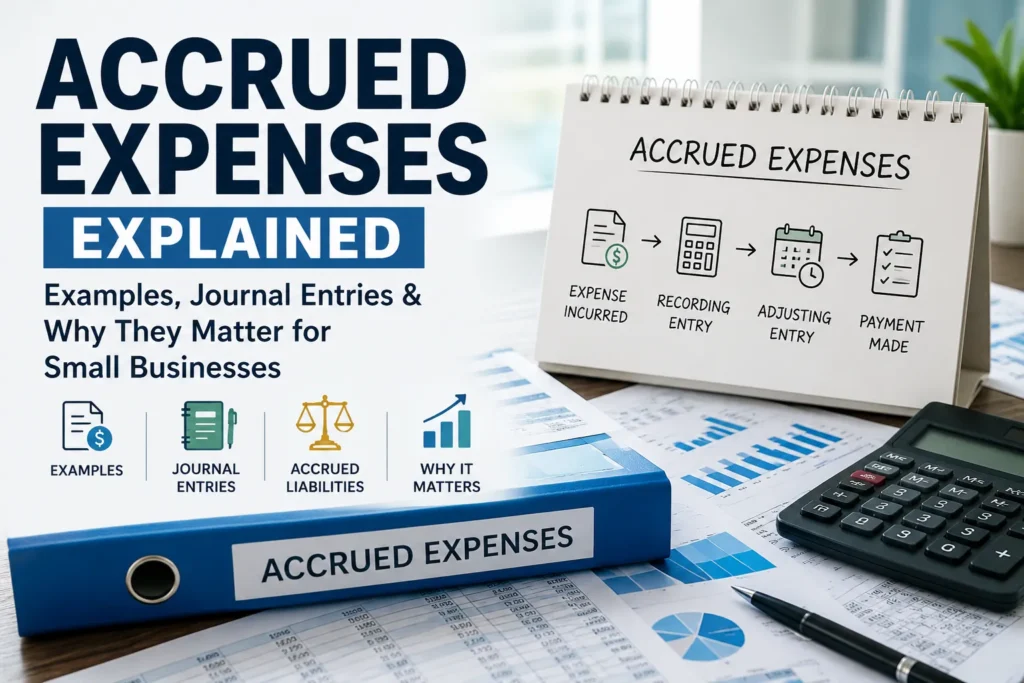
An accrued expense is one of the most important concepts in business accounting that every small business owner needs to understand. The entire process of tracking business costs has become more sophisticated because authorities, investors, and financial institutions now focus heavily on accurate financial reporting, procedural integrity, and proper validation of financial records.
What Is Actually Changing in Expense Management in 2026
It is no longer a simple recording process. It now works like a layered checking system where each financial transaction passes through multiple levels of review.
The purpose is simple:
– Prevent inaccurate financial reporting
– Ensure expense consistency across periods
– Verify all incurred costs are properly recorded
– Maintain compliance with accounting standards
At every stage, expense verification is happening in different forms, not just once at the end of the period.
How the Accrued Expense Flow Works Step by Step
The process usually follows this order:
– Identification of incurred costs like wages, interest, and utilities
– Calculation of accurate amounts
– Recording through accrual journal entry procedures
– Making adjusting journal entries at period end
– Reversal and payment when bills arrive
– Final review by management or accountants
Each step strengthens the verification chain and reduces the risk of financial misstatement.
Accrued Expenses Accounting Entry Explained
It is the official recording that confirms an expense has been incurred. It usually happens in layers:
– Identification of the expense type
– Calculation of the amount owed
– Debit to the appropriate expense account
– Credit to the accrued liabilities account
How to Record Correctly
Recording is often misunderstood. It simply means: The cost is recognized in the period it is incurred, regardless of when payment occurs.
Steps include:
– Identify the expense incurred
– Calculate the amount accurately
– Create an accrual journal entry
– Post to the general ledger
– Make adjusting journal entries if needed
The accrual journal entry does not replace actual payment. It only supports the financial reporting process.
Accrual Journal Entry and Why It Matters
An accrual journal entry is where accountants confirm that an expense is properly recorded and not altered. Checks usually include:
– Amount verification
– Period accuracy
– Account classification confirmation
– Ledger cross-checks
If the accrual journal entry fails, financial verification stops at this stage.
Accrued Liabilities and Balance Sheet Validation
Accrued liabilities are one of the most critical parts of balance sheet preparation. They confirm:
– Amounts owed accurately
– Classification as current liabilities
– Proper period matching
These details are cross-checked with financial records, and sometimes auditors verify them further during review.
Adjusting Journal Entries in Accrual Accounting
Adjusting journal entries are required for businesses using **accrual basis accounting**. They may include:
– Wage accruals
– Interest accruals
– Utility accruals
– Tax accruals
Such entries go through proper verification and sometimes audit review depending on the business size.
Complete Verification Process in Real Sequence
The complete process works like this:
– Identification of incurred costs
– Amount calculation
– Recording through accounting entry
– Making adjusting journal entries at period end
– Reversal of accruals (if used)
– Payment recording when bills arrive
– Final reconciliation
Accurate Bank Reconciliation Services help verify accrued expenses before financial statements are finalized. At each stage, verification continues in different forms to ensure consistency and accuracy.
Role of Accountants and Bookkeepers
Accountants and bookkeepers are responsible for:
– Identifying all incurred costs
– Calculating accurate amounts
– Making proper adjusting journal entries
– Ensuring compliance with accrual basis accounting
– Preparing accurate financial statements
Many growing businesses also rely on Virtual CFO Services to improve financial reporting and month-end accounting processes. Without accountants and bookkeepers, verification cannot move forward in any stage.
Accounting and Bookkeeping Services and Professional Support
Professional Accounting and Bookkeeping Services are required when businesses need expert handling of financial records. These services ensure:
– Proper accrual journal entry creation
– Timely adjusting journal entries
– Compliance with accrual basis accounting standards
– Reliable financial statement preparation
This strengthens financial verification in all cases.
Common Mistakes That Delay Accrued Expense Recording
Delays usually happen due to:
– Missing accrual journal entry
– Incorrect amount calculations
– Poor documentation
– Skipping adjusting journal entries
– Incorrect account classification
– Incomplete expense identification
Each issue directly affects verification timelines.
Best Practices for Smooth Expense Management
To avoid delays:
– Ensure all expenses are complete and accurately calculated
– Follow proper accrual journal entry procedures
– Do not skip adjusting journal entries
– Maintain consistency across all records
– Double-check details before submission
These steps improve success in verification significantly.
Importance of Procedural Integrity in Management
When you are dealing with accrued expenses this matters a lot. It is about how those expenses get handled, checked, and moved along through every single stage, one at a time. That is why doing it in the proper order makes the whole expense verification process easier, cleaner, and way less stressful. You know what is coming next. No surprises.
Frequently Asked Questions
What is an accrued expense and why does it matter?
It’s a cost you’ve incurred but haven’t paid yet, like wages earned or utilities used but not billed. It matters because it shows your true financial obligations and stops you from spending money you actually owe.
How do I record an expense?
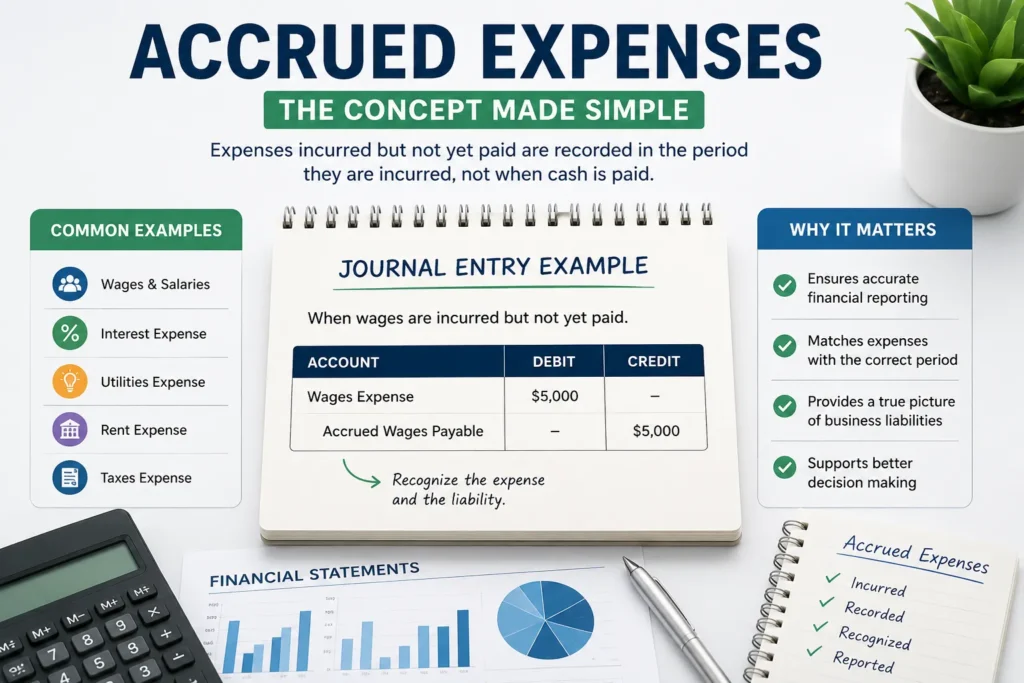
Debit the expense account and credit an accrued liabilities account. Example: debit Wages Expense, credit Accrued Wages Payable. Simple as that.
What’s the difference between expenses and accounts payable?
Accrued expenses are costs incurred but not yet billed — wages, interest. Accounts payable are vendor invoices you’ve received but haven’t paid. Different timing, different paperwork.
When should I make adjusting entries for accrued expenses?
At the end of each accounting period — monthly or quarterly. That way your books show all expenses incurred, even if you haven’t paid yet.
Can I use cash basis instead of accrual accounting?
Small businesses can, if they qualify. But accrual accounting gives you a clearer picture by matching revenue with expenses. Most businesses switch as they grow.
What are common examples of accrued expenses?
Wages owed, interest on loans, utilities used but not billed, rent for the period, professional services rendered, and taxes not yet paid. All need proper entries.
How do accrued expenses affect financial statements?
They increase expenses on your income statement (lowering net income) and increase liabilities on your balance sheet. Gives you a real picture of where you stand.
What happens if I forget to record an accrued expense?
Your profits look higher than they are. Your liabilities are understated. And you might think you have more cash than you actually do. That’s a problem when bills show up.
How can Accounting and Bookkeeping Services help?
They spot all your accrued expenses, calculate the right amounts, make proper entries, and keep you compliant. Saves you from costly errors and gives you reliable numbers.
Do I need to reverse accrued expense entries after paying?
It’s optional. But many businesses do it to keep bookkeeping simple. You cancel the original entry and record the payment when it happens.