
Buying a small business is a big move. It is exciting, but it is also risky. The difference between a smart buy and a costly mistake comes down to one thing: the investigation. That investigation is called financial due diligence. It is your chance to look under the hood before you hand over your money.
Too many buyers fall in love with a business. They see the brand, the customers, or the product and get carried away. A smart buyer ignores the emotion and focuses on the numbers. The financial due diligence process is how you separate fact from fiction. It means digging into the company’s records to check if the seller is being honest. Skip this step, and you are gambling with your hard-earned cash.
What Are You Really Trying to Find Out?
The main goal of a financial due diligence checklist is simple: find the true financial health of the business. You need to check what the seller says about revenue, profit, and cash flow. Sellers often paint a pretty picture. They might talk about growing sales but ignore rising costs. An independent review helps you clean up the numbers. You adjust them to show the real ongoing costs without the seller’s personal expenses or one-time gains.
Here is a common example. Many small business owners run personal costs through the company. This inflates the profit for a new owner who would not have those costs. A proper review catches these add-backs. Common add-backs are the owner’s salary above market rate, personal car costs, travel, and family members on the payroll. By adding these costs back to the profit, you get a clear view of the real business acquisition due diligence value.
The Main Areas You Must Check
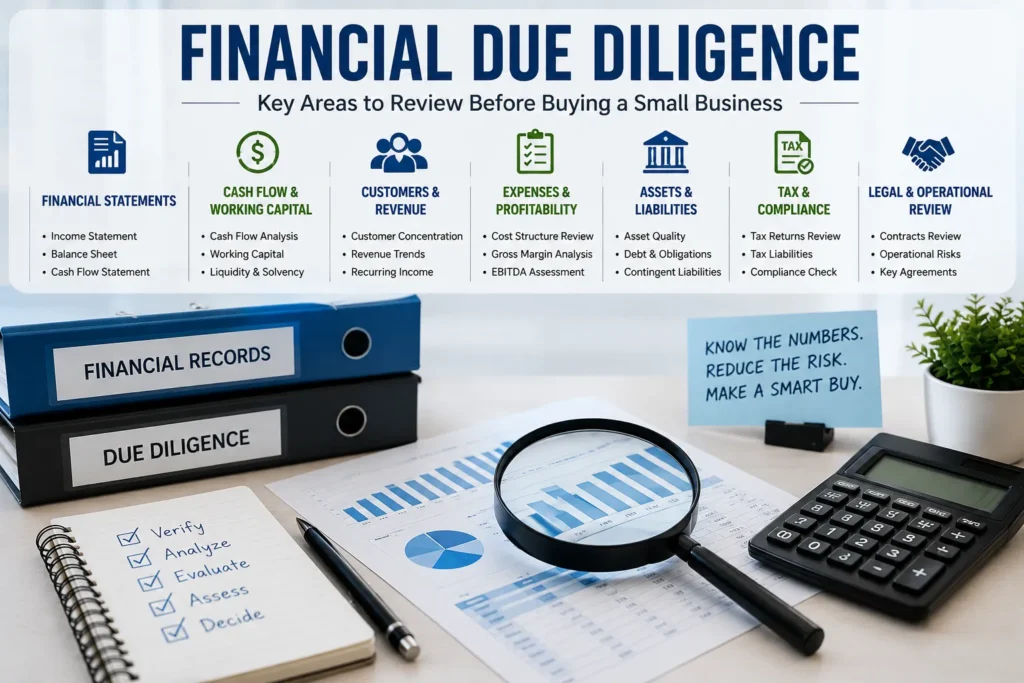
A full financial due diligence process is not one single task. It is a series of checks across different areas. Each check gives you a piece of the puzzle. Put them together, and you see the whole picture.
Profit and Loss Statements
Start with the income statement. It shows income and costs over time. You want to confirm the business’s direction. Is income growing, flat, or falling? Pay close attention to the gross profit margin. This is a key sign of efficiency. A falling margin could mean rising costs or price pressure. Both are warning signs.
Then look at operating costs line by line. Watch for unusual spikes or drops. This is where the due diligence audit gets detailed. Ask for explanations for big changes between years. You are looking for consistency. If a cost jumps around without a clear reason, dig deeper.
The Balance Sheet
The balance sheet shows what the company owns and owes at a specific time. It tells you what assets you get and what debts you take on. Focus on the quality of the assets. Accounts receivable are often big. Check their age. Old receivables are hard to collect. A pile of old debt from customers points to problems.
Inventory also needs a look. Is it old or outdated? The seller might value it at cost, but the real value is often lower. You may need a physical count to confirm. On the liability side, know all debts and obligations. This includes long-term debt, lines of credit, and unpaid bills. Too much debt will kill your cash flow.
Cash Flow and Working Capital
Here is a truth you must remember: profit is not cash. A business can look profitable on paper but still run out of money. The cash flow statement is vital. Check the operating cash flow. Is it enough to keep the business running and pay debts?
Working capital is the fuel for a small business. It is current assets minus current liabilities. You need to know the level of working capital required to run the business. The seller will often try to give you as little as possible at closing. You must ensure there is enough cash and stock to keep going after the purchase. This is a key point in the small business acquisition due diligence checklist.
Look Beyond the Numbers
Do not stop at the financial statements. You must understand what drives those numbers. That means looking at operations.
Where Does the Money Come From?
A business that relies on one customer for most of its income is a huge risk. Losing that customer could be a disaster. You must analyze the customer base. Understand the relationships with major clients and the chance of keeping them after the purchase.
Also look at the quality of income. Recurring income from contracts or subscriptions is far more valuable than one-off projects. It gives stability. Check customer churn too. High churn means the business is always fighting to replace lost customers. That is expensive and inefficient.
The Seller’s Real Earning Power
This is where EBITDA comes in. EBITDA stands for Earnings Before Interest, Taxes, Depreciation, and Amortization. Buyers often value a business on a multiple of EBITDA. That is why calculating the normalized EBITDA is so important. The seller will show you a number pumped up with add-backs. You, perhaps with an outsourced CFO services for business acquisition must calculate a realistic figure.
An outsourced CFO brings an unbiased view. They can spot the real add-backs and ensure the valuation is based on sustainable earnings. This expert help is worth the cost, especially if you lack a finance background.
Tax Returns and Compliance
Tax returns often show a more conservative view than the internal financials. Compare the two. Big differences are a major warning sign. Many small businesses underreport income to the tax authorities. That practice can become your problem.
Check for past tax issues too. Unresolved tax debts become yours after the purchase. Talk to a tax professional. This is a non-negotiable step in the financial due diligence.
Contracts and Legal Risks
Financials are tied to legal and operational risks. Review all key contracts. Leases, supplier deals, customer contracts, and employment agreements all matter. The financial due diligence must find any contracts that could be unprofitable or terminated on a change of ownership. An assignment clause might let the other party walk away if the business is sold. Find this risk before you close.
Also look at operations. Are the processes efficient? Any blockages that hurt profit? Knowing the workflow helps you see if the business can run smoothly after you take over.
Conclusion
Thorough financial due diligence is the single most important step to protect your investment. It moves your decision from hope to hard facts. This checklist gives you a roadmap. It helps you ask the right questions and look in the right places.
Frequently Asked Questions
What is financial due diligence when buying a small business?
It is a deep check of a company’s financial records, operations, and legal status.
How long does financial due diligence usually take?
It generally takes 30 to 60 days. This gives you enough time to review financials, tax returns, contracts, and operations without being rushed.
What are add-backs and why do they matter?
Adding them back to profit shows the true earning potential and helps value the business correctly.
Do I need a professional for this process?
While you can do it yourself, hiring an accountant or outsourced CFO is highly recommended.
What are common red flags in due diligence?
Falling gross margins, heavy reliance on one customer, unstable cash flow, gaps between financials and tax returns, and major legal risks are all serious warnings.
How does the balance sheet affect my buying decision?
It tells you what assets you get and what debts you take on. A weak balance sheet with too much debt can be a deal-breaker.
Why is cash flow more important than profit sometimes?
Cash flow is actual money moving in and out. A business can show profit but still go broke if cash is tied up. Positive cash flow is essential for survival.
How are tax returns used in due diligence?
Tax returns offer an independent view of reported income. Comparing them to the financial statements can reveal gaps.
Can due diligence uncover operational problems?
Yes, a thorough review often finds operational weaknesses. Checking inventory age can show poor management, and reviewing contracts can show a lack of steady income.
Is the purchase price always adjusted after due diligence?
If the review finds issues not disclosed before, you can negotiate a lower price. You can also ask the seller to fix problems before the deal closes.