
Running a business involves more than making sales and paying bills. If you don’t have the key financial details, it may be hard to control your spending, to budget for lean times or to make sound financial decisions. A budget for small business will provide the owner with a clear picture of his money flow, where it is being spent and how much is left for future growth.
For any business or a small business, having a budget can simplify day-to-day financial management, regardless of whether you’re running a new business or a successful small business. This is a ‘how-to’ guide to the first steps.
What Is a Small Business Budget?
A business budget is a financial statement that predicts the revenue and expenses that a business will have within a certain timeframe. It assists owners to monitor their spending, establish aims and budget for future expenditures.
A well-organized budget for small business usually includes sales revenue, operating expenses, payroll, taxes, inventory, and savings for unexpected costs.
Why Is Budgeting Important for Small Businesses?
Budgeting in small businesses helps owners make better financial decisions instead of relying on guesswork. It also makes it easier to identify unnecessary spending and prepare for financial challenges.
Some important benefits include:
- Expense control: Keeps business spending within planned limits.
- Better cash flow: Helps ensure enough money is available for regular payments.
- Financial planning: Makes future investments and expansion easier to manage.
- Debt management: Helps plan loan repayments and other obligations.
- Goal setting: Provides a clear direction for business growth.
How to Create a Budget for a Small Business?
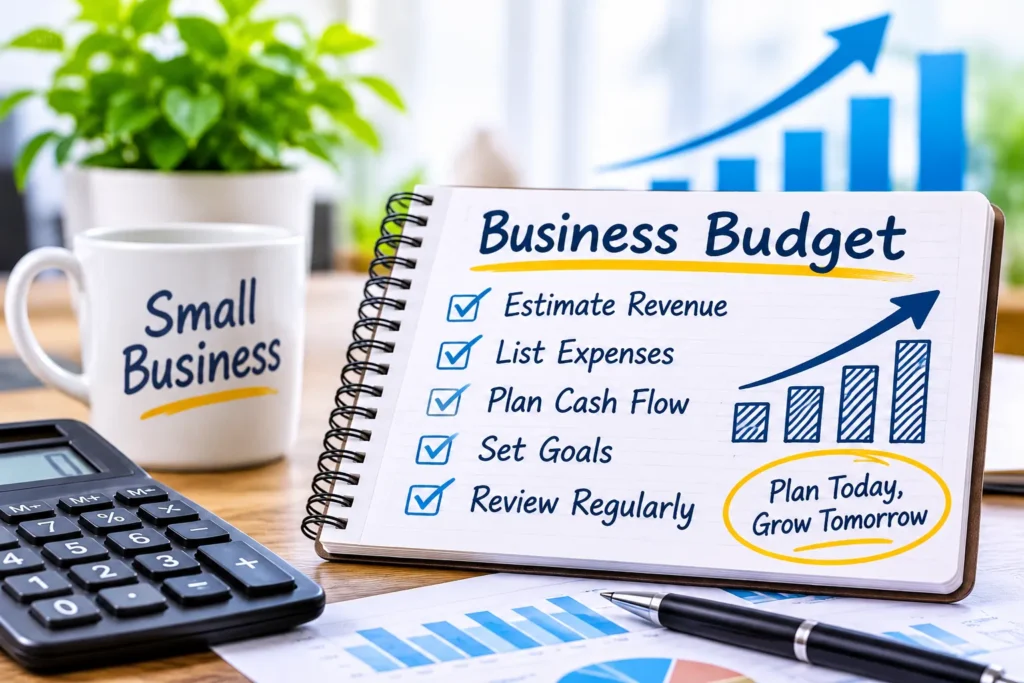
Creating a budget does not have to be complicated. Breaking the process into manageable steps makes it easier to understand and maintain.
1. Calculate Your Expected Revenue
Start by estimating how much money the business expects to earn. Review previous sales records, customer demand, seasonal trends, and existing contracts.
For a new business, use realistic sales estimates rather than assuming every month will be profitable.
2. List All Business Expenses
Identify fixed and variable expenses to understand where money is going.
- Fixed costs: Rent, insurance, software subscriptions, and regular salaries.
- Variable costs: Inventory, packaging, shipping, and sales commissions.
- Occasional costs: Equipment repairs, marketing campaigns, and professional services.
Including these expenses makes business budget planning more accurate.
3. Estimate Monthly Cash Flow
Review the income and payments that are expected for the month to determine if there will be adequate funds to cover payments that need to be made throughout the month.
Having a monthly business budget will determine if there are times when expenses exceed income, so the business owner can look ahead and plan accordingly when cash is running out.
4. Set Financial Goals
Determine the business’s goals for financial success. Goals can be to provide more profit, pay off debt, hire workers or buy new equipment. Set realistic targets and assign a specific amount toward each goal.
5. Review and Adjust the Budget
Business expenses and income can change throughout the year. Compare actual results with planned figures on a monthly basis, modifying the estimates as needed.
What Should a Small Business Budget Include?
A useful business budget should cover all major financial activities.
| Budget Category | Examples |
| Revenue | Product sales and service income |
| Operating costs | Rent, utilities, and internet |
| Payroll | Salaries and employee benefits |
| Marketing | Advertising and promotions |
| Inventory | Supplies and raw materials |
| Taxes | Estimated business taxes |
| Emergency savings | Unexpected repairs and expenses |
How Can You Manage Cash Flow Through Budgeting?
The cash flow budgeting is a process of looking at the inflow and outflow of cash. Even if a company is able to make some decent sales, but customers are slow in paying the invoices, the company may fall short of paying bills.
The effective management of cash flow involves monitoring payment terms, chasing up debts, not buying things that can be avoided and keeping a reserve fund. This will help maintain smooth functioning of daily operations.
What Is Business Budget Forecasting?
Budget Forecasting is a process in business where the expected future income and expenses are estimated based on the past records, present performance and future market conditions.
It assists owners to plan for seasonal fluctuations, future manpower needs, equipment needs, and possible decreases in income. Regularly updating forecasts can help create more realistic financial planning and help make better decisions.
Frequently Asked Questions
How much money should a small business keep in savings?
The amount depends on operating costs and financial stability. Many businesses aim to maintain enough reserves to cover three to six months of essential expenses, although smaller reserves may be a starting point for newer companies.
How often should a business budget be reviewed?
Ideally, a budget needs to be checked on a monthly basis. Regular reviews can help determine any unplanned expenses, revenue areas, and where savings should be made to avoid disruption of business operations.
What is the difference between a budget and a forecast?
A budget is an exercise of establishing monetary goals and restrictions for a given timeframe. A forecast looks at what is likely to happen, in light of the present business operations, the market, and new financial data.
Can a new business create a budget without sales history?
Yes. Market research and information about competing companies, their suppliers and quotes, and customer demand can be used to estimate the revenue and expenses of a new business. The above estimates should be taken with some caution as actual sales data becomes available.
What tools can help with small business budgeting?
Microsoft Excel and Google Sheets are good spreadsheet programs to use for income and expense tracking. Accounting software can also help with the financial reporting, expense tracking, and managing cash flow.
Why do small businesses struggle with budgeting?
Some of the most frequent issues are underestimating costs, lack of record keeping, inconsistent sales, and business and personal finances intertwined. These issues can be minimized with regular monitoring and with accurate and realistic financial estimates.