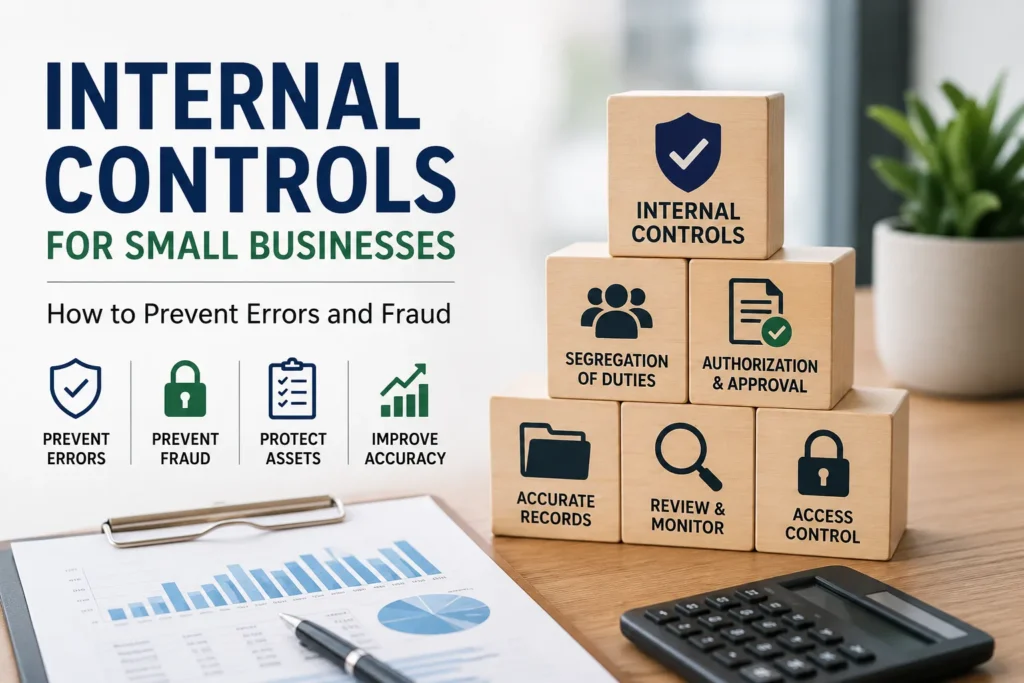
Internal controls for small businesses help protect your money, your financial records, and your day-to-day operations.
Think about one person handling everything like receiving payments, recording transactions, depositing money, and checking the bank account. If something goes wrong, there’s no one else to catch it.
A payment gets entered wrong. An invoice gets paid twice. Company money gets used without approval.
These things can happen in any business. But simple checks can catch them early and keep small problems from turning into big losses.
What Are Internal Controls for Small Businesses?
Internal controls for small businesses are rules and checks that help protect a company from mistakes, financial loss, and fraud.
They can be very simple. One person may prepare a payment while another approves it, or the business owner may review bank statements each month.
The goal is to make sure important financial activities are not happening without any review.
Why Are Small Business Internal Controls Important?
Internal controls for small businesses controls give you a better way to keep track of your business finances.
If one person controls payments, records, and bank activity, a mistake can easily go unnoticed. Having another person review important transactions adds an extra layer of protection.
Good controls can help protect:
- Business money
- Customer payments
- Financial records
- Company assets
- Important documents
They can also help you spot unusual activity before it becomes a serious problem.
What Are Internal Control Procedures?
Internal control procedures are the steps used to keep financial activities accurate and secure.
They may include:
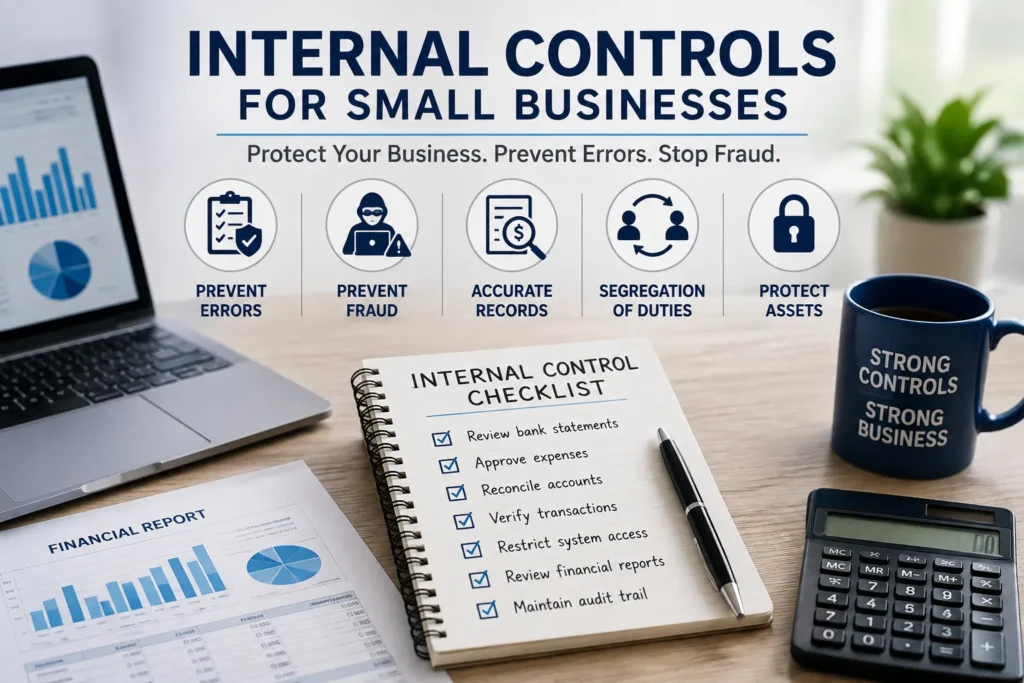
- Checking bank statements
- Approving large expenses
- Keeping receipts and invoices
- Reviewing financial reports
- Limiting accounting system access
- Protecting financial passwords
These checks make it easier to find mistakes and question transactions that do not look right.
What Are Accounting Internal Controls?
Accounting internal controls help keep financial records accurate and business money protected.
For example, one person can prepare a payment while another reviews it before it is sent. This second check can catch an error before money leaves the business.
Examples of Accounting Internal Controls
- Bank reconciliation
- Expense approval
- Invoice reviews
- Payment authorization
- Transaction checks
- Financial report reviews
- Limited system access
How Do Internal Controls Help Prevent Fraud?
Internal controls for small businesses and fraud prevention work closely together.
Fraud becomes easier when one person has complete control over payments and financial records. Reviewing expenses, checking bank activity, and separating duties can reduce this risk.
For example, employees should not approve their own expenses, and large payments should be reviewed before they are sent.
These controls cannot stop every fraud attempt, but they can make suspicious activity easier to notice.
What are Financial Internal Controls?
Financial internal controls help protect business money and financial information.
- They help answer questions such as:
- Who approved this payment?
- Why was this expense made?
- Does the bank balance match the books?
- Was the payment recorded correctly?
Examples of Financial Internal Controls
- Monthly bank reconciliation
- Expense approval
- Payment authorization
- Budget reviews
- Financial report checks
- Restricted bank access
The best controls depend on how your business works and where your biggest risks are.
What is an Internal Control Framework?
An internal control framework is just a way to spot risks and figure out how to handle them. Start simple, ask yourself what could go wrong. Then put a basic check in place to lower that risk.
Worried about large payments? Require approval. Bookkeeping mistakes keep popping up? Review the records regularly.
A small business doesn’t need a fancy, complicated system. You just need controls that actually work — practical, easy to follow, and simple enough to stick with.
What Are Some Examples of Internal Controls?
There are many examples of internal controls you can use in daily business activities.
Separate Financial Duties
When possible, do not let one person handle every step of a financial transaction. A second review can help catch mistakes.
Review Bank Statements
Check your bank statements regularly and investigate anything that does not match your records.
Approve Large Expenses
Set a spending limit and require approval before large or unusual purchases are made.
Protect Financial Access
Only give employees access to bank accounts and accounting systems when they need it.
Keep Good Records
Save receipts, invoices, contracts, and payment records so transactions can be checked later.
What qre the Types of Internal Controls?
There are different types of internal controls, and each one helps in a different way.
Preventive Controls
These help stop problems before they happen. Passwords, approval rules, and restricted access are common examples.
Detective Controls
These help find problems after they happen. Bank reconciliation and financial reviews can uncover mistakes or unusual activity.
Corrective Controls
These help fix problems after they are found, such as correcting an accounting record or changing system access.
Using different controls together can give your business better protection.
How Can a Small Business Improve Internal Controls?
Look at your money, financial records, how you handle payments, and who has access to your systems. Then ask yourself, what could go wrong? And where could a simple check make all the difference?
Require approval for large payments. Review your bank accounts on the regular. Keep clear records of cash payments. Limit who has access to your financial systems.
The goal isn’t to make things harder, it’s to know what’s happening and make sure someone’s paying attention.
Conclusion:
Internal controls for small businesses don’t have to be complicated or cost a fortune.
Check your bank accounts regularly. Review your expenses. Approve important payments. Protect your financial info. And keep solid records.
The right internal control procedures can cut down on mistakes and make fraud a lot harder to hide.
You can’t stop every problem — but good controls help you catch issues earlier and protect your business from bigger financial trouble down the road.
Frequently Asked Questions
What are internal controls for small businesses?
They’re rules and checks that protect your money, financial records, assets, and sensitive info from mistakes and fraud.
Why are small business internal controls important?
They help you keep an eye on financial activity, catch mistakes early, protect your money, and lower the risk of unauthorized transactions slipping through.
What are examples of internal controls?
Checking bank statements. Approving big expenses. Reconciling accounts. Limiting who has access to money. Reviewing reports regularly. Keeping solid financial records.
How do internal controls help prevent fraud?
They add extra checks to financial activities. Separating duties and reviewing transactions makes it way harder for someone to commit fraud or cover it up.
What are financial internal controls?
Procedures that protect your money and financial info — expense approvals, payment authorizations, bank reviews, and financial reporting.
What is an internal control framework?
It’s a system that helps you identify risks, assign responsibilities, create procedures, monitor activity, and fix problems when they pop up.
What are the types of internal controls?
Three main types — preventive controls stop problems before they happen, detective controls find problems, and corrective controls fix issues after they’re discovered.
How can a small business improve internal controls?
Check bank accounts regularly. Approve large expenses. Separate duties. Protect financial access. Keep good records. Review reports often.
Do small businesses need internal controls?
Yes, even small businesses can get hit with mistakes or fraud. Simple controls can protect your money and records without making everyday operations a headache.