
Separating business and personal finances is one of those things everyone agrees with, but many people still don’t properly do it. It usually starts with small habits… paying one bill from the business account, using a personal card for a business tool, or mixing a few expenses “just for now.”
And slowly, without even noticing, everything gets mixed.
That’s where problems begin. Not immediately, but later when tax time comes, or when trying to understand what the business is actually earning.
That’s exactly where most small business bookkeeping tips and mistakes quietly come from.
Why this matters more than it sounds
When separating business and personal finances is not done properly, money stops feeling clear.
It becomes hard to answer simple questions like:
- How much is actually profit?
- What was business spending?
- What was personal spending?
- Where did the money really go?
And honestly, that confusion builds stress over time.
That’s why business finance management is not something “advanced”… it’s just basic control over your own money.
The First Thing That Actually Fixes Everything
Here’s the simplest truth.
If separating business and personal finances is the goal, the first move is very straightforward:
Just open a separate business bank account.
No overthinking needed.
Once that happens:
- Business money stays in one place
- Personal money stays separate
- Tracking becomes automatically clearer
- Tax time becomes less stressful
It feels like a small step, but it changes everything.
Stop Mixing Money Without Thinking
One of the biggest habits that quietly causes trouble is using personal cards for business spending.
At first, it feels harmless. Just one payment. Then another. Then it becomes normal.
But later, when looking back, nothing is clear.
That’s when business expense tracking becomes messy.
Because now it’s hard to figure out:
- What was actually business-related
- What was personal
- What can be claimed
- What should not be included
So the simple rule is:
If it is business, it stays in business accounts. Always.
That is real separating business and personal finances in action.
Keep Money Tracking Very Simple
There is no need for complicated systems.
The truth is, most problems come from not tracking at all.
So the basic habit is:
- Know what money comes in
- Know what money goes out
- Know why it goes out
That’s it.
When this becomes a habit, small business financial management becomes much easier and far less stressful.
Even a simple weekly check makes a big difference.
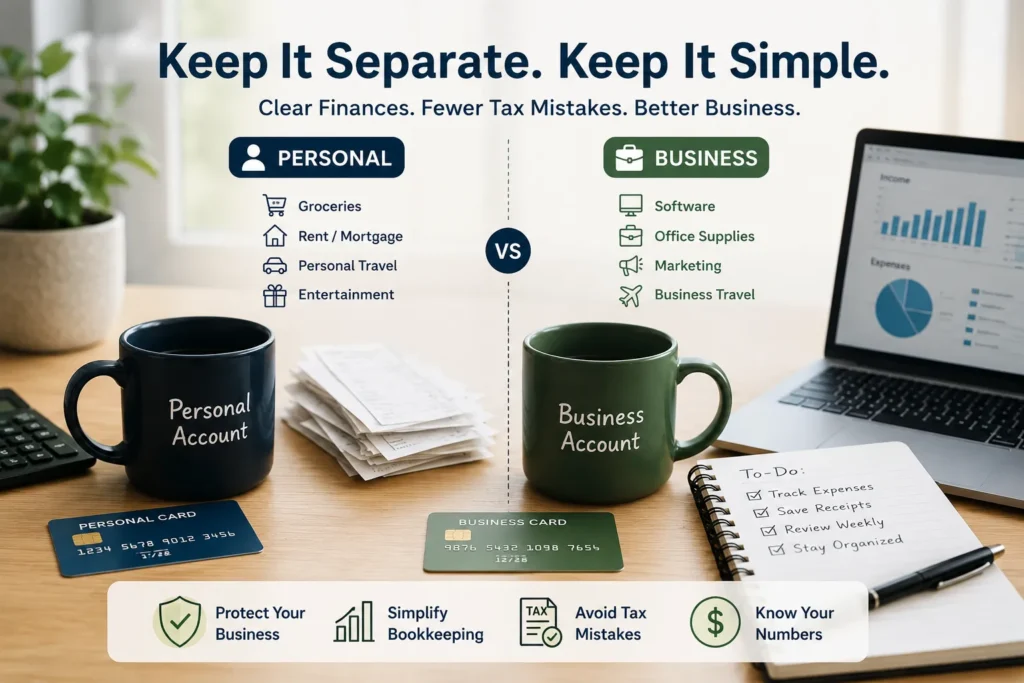
The Expenses that should Stay Completely Separate
Let’s be very clear here.
Some expenses should never enter business records.
Things like:
- Grocery shopping
- Family expenses
- Personal travel
- Entertainment
- Personal subscriptions
These do not belong in business books.
Trying to mix them is where most small business tax mistakes start happening without intention.
So a simple mindset helps:
If it is not for business, it does not go into business records.
That’s clean separating business and personal finances.
Receipts Still Matter More Than People Think
Even today, receipts are still important.
Because money without proof becomes uncertain later.
Receipts help with:
- Tax deduction for small business
- Expense verification
- Clean bookkeeping
- Avoiding confusion later
So the habit should be:
- Save immediately
- Don’t wait
- Organize later, but capture now
This supports better how to manage your business finances without last-minute panic.
Don’t Treat Tax Season like a Cleanup Time
A very common mistake is ignoring everything all year and trying to fix it at the end.
That always creates stress.
Instead, simple ongoing habits work better:
- Weekly expense checks
- Monthly reviews
- Regular updates
This keeps business expense tracking under control all year, not just once.
Accounting Tools Make it Easier, Not Complicated
Some people avoid tools thinking it will be too complex.
But in reality, they actually simplify things.
Good tools help with:
- Tracking income automatically
- Organizing expenses
- Preparing reports
- Making tax filing easier
This improves business accounting tips in a very practical way.
It is not about being technical… it is about staying organized.
Simple Habits that keep Everything Clean
Here’s what actually works long term:
- Keep business and personal accounts separate
- Never mix spending
- Track money weekly
- Save receipts immediately
- Review finances regularly
- Stay consistent, not perfect
Because separating business and personal finances is not a one-time task… it is a daily habit.
And once this habit is built, everything becomes easier:
- Taxes feel simpler
- Bookkeeping becomes lighter
- Business clarity improves
- Decisions become smarter
Conclusion:
At the end of the day, separating business and personal finances is not about rules or accounting complexity.
It’s about control.
Because when money is clear, everything else becomes clearer too.
And when things are clear, business stops feeling confusing and starts feeling manageable.
That’s the real benefit.
Frequently Asked Questions
Why separate business and personal finances?
It keeps money clear, makes tracking profit easy, reduces tax stress, and helps you understand what your business really earns.
What’s the first step to separate finances?
Open a separate business bank account—it’s simple and keeps business money in one place.
Can I use my personal card for business expenses?
No. Always use business accounts for business spending to avoid messy tracking later.
What basic habits help track money?
Know what comes in, what goes out, and why—check weekly for less stress.
Which expenses should never go in business records?
Personal ones like groceries, family trips, entertainment, or subscriptions.
Do receipts still matter in 2026?
Yes, they prove expenses for taxes, deductions, and clean bookkeeping. Save them right away.
How often should I review finances?
Weekly checks and monthly reviews keep things under control all year. Spend 15 minutes a week matching bank statements.
Is tax season just for cleanup?
No, ongoing habits beat end-of-year panic. Track regularly instead.Regular updates make filing feel straightforward,
Do I need fancy accounting tools?
Simple ones help track income, organize expenses, and prep taxes without complexity. It’s about staying organized, not being tech-savvy.
What are the top habits for clean finances?
Separate accounts, no mixing, weekly tracking, save receipts, review often, and stay consistent. These build control over your money daily.