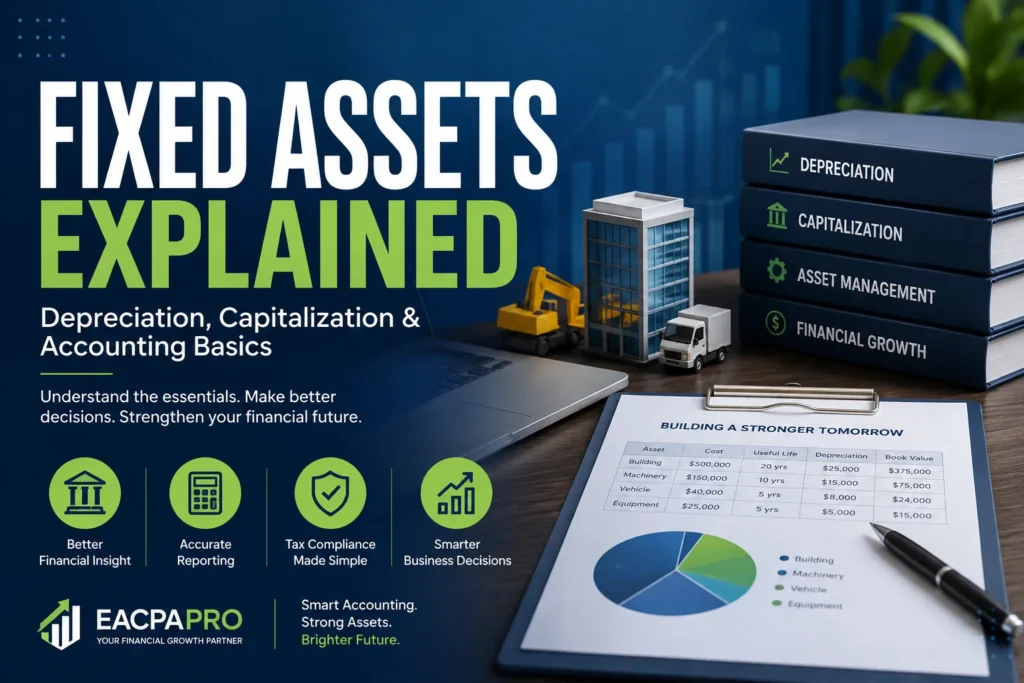
Fixed assets are not exciting. But they matter. A lot. If you own a building, machinery, vehicles, or office equipment, you have fixed assets. And how you handle them affects your taxes, your financial statements, and your business decisions.
A fixed asset is a long-term tangible item your business owns and uses to generate income . Think buildings, machinery, vehicles, computers, and office furniture.
The key difference? You are not selling these to customers. You are using them to run your business. And they last more than one year.
Fixed Asset Management: The Basics
Fixed asset accounting is simply recording, tracking, and managing these long-term assets throughout their life. It involves:
– Recording the initial purchase cost
– Tracking Fixed assets depreciation over time
– Recording maintenance and improvements
– Calculating gain or loss when you sell or retire the asset
Get this right, and your financial statements actually reflect reality. Get it wrong, and you are flying blind.
Fixed Asset Capitalization: What It Is and Why It Matters
Here is where people get confused. When do you record something as a fixed asset versus just an expense?
Fixed asset capitalization is the process of recording a purchase as a fixed asset instead of an immediate expense. Instead of deducting the full cost in the year you buy it, you spread that cost over the asset’s useful life through depreciation.
The IRS says you must capitalize property you produce or acquire for use in your business if it has a useful life of more than one year.
Capitalization accounting means you put the asset on your balance sheet at its original cost. Then you depreciate it over time. This gives a much clearer picture of your financial health than writing off big purchases all at once.
Depreciation Methods: How Assets Lose Value
Depreciation is simply spreading the cost of a fixed asset over its useful life . Assets wear out. They become obsolete. They lose value.
There are a few common depreciation methods:
Straight-Line Depreciation
The simplest. You spread the cost evenly over the asset’s life. Buy a $10,000 machine with a 10-year life? Deduct $1,000 each year.
Declining Balance Method
Accelerated depreciation. You take larger deductions early on, less later. Good for assets that lose value faster when they are new.
Units of Production Method
Depreciation based on usage. The more you use it, the more you depreciate it.
Section 179 Deduction
This lets you deduct the full cost of certain assets in the year you buy them . No waiting. No spreading it out.
Choosing the right depreciation methods affects your taxes and your financial statements.
Asset Lifecycle Management: From Purchase to Disposal
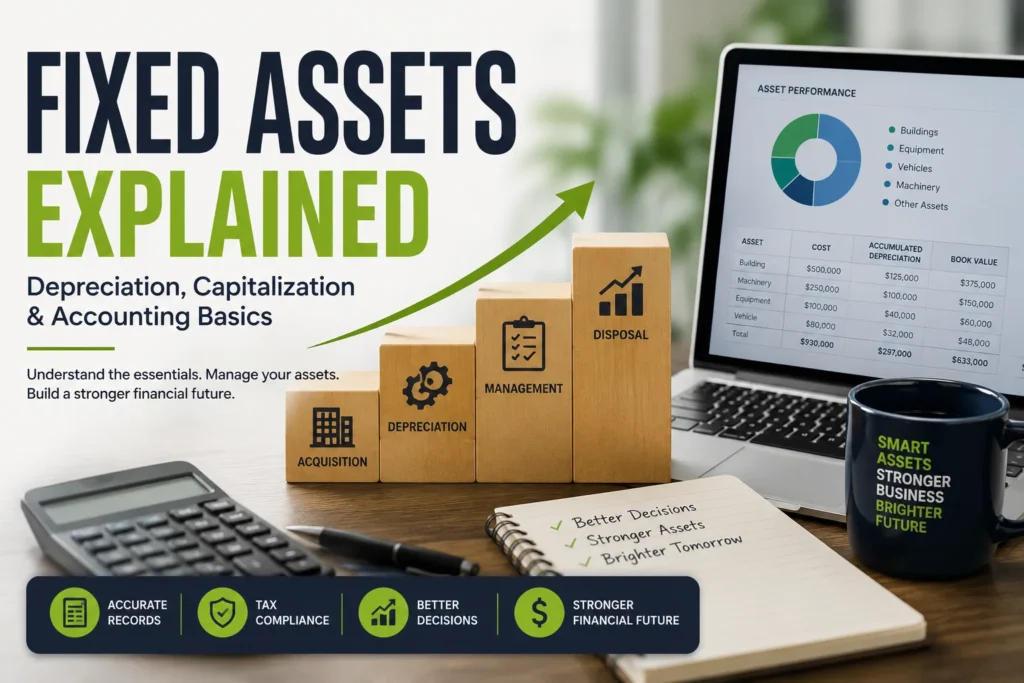
Asset lifecycle management covers the entire journey of a fixed asset from acquisition to disposal.
- Acquisition. You buy the asset. You record it at cost, including taxes, shipping, and installation.
- Maintenance and Repairs. You keep it running. Repairs that restore it to original condition? Expenses. Improvements that extend its life or add value? Capitalized.
- Depreciation. You depreciate it over its useful life.
- Disposal. You sell it, retire it, or scrap it. You record gain or loss based on sale price minus net book value.
Why Fixed Asset Accounting Matters
Accurate fixed asset accounting is not just bookkeeping. It is business survival. Your balance sheet shows your assets. If fixed assets are wrong, everything is wrong. Investors and lenders rely on this .
Depreciation reduces taxable income. Screw it up, and you overpay or underpay taxes . Both are bad. Knowing what your assets are worth helps you decide: repair or replace? Upgrade or wait? Without accurate data, you are guessing.
When to Get Professional Help
If you have a lot of fixed assets, get help. A CPA can set up your fixed asset accounting system, help you choose the right depreciation methods and keep you compliant. Saves time. Prevents costly mistakes.
Conclusion:
A fixed asset is any long-term tangible asset used in your business. Fixed asset accounting is recording and managing them properly. Fixed asset capitalization decides whether to record as asset or expense. Choosing the right depreciation methods affects your taxes and financial reporting.
Whether you use straight-line, declining balance, or Section 179, the goal is the same. Accurately reflect your assets. Make smart business decisions.
Frequently Asked Questions
What is a fixed asset?
A fixed asset is a long-term tangible asset used in business operations to generate income. It has a useful life of more than one year. Examples include buildings, machinery, vehicles, and equipment.
What is fixed asset accounting?
Fixed asset accounting is recording, tracking, and managing long-term tangible assets throughout their lifecycle. It includes capitalization, depreciation, and disposal.
What is fixed asset capitalization?
Fixed asset capitalization records a purchase as a fixed asset instead of an expense. The cost is spread over the asset’s useful life through depreciation. It applies to material purchases with a useful life of more than one year.
What is capitalization accounting?
Capitalization accounting records assets on the balance sheet and depreciates them over time. It gives a more accurate picture of financial health than expensing major purchases all at once.
What are depreciation methods?
Depreciation methods include straight-line, declining balance, units of production, and sum-of-the-years-digits. The method you choose affects your tax liability and financial statements.
What is asset lifecycle management?
Asset lifecycle management covers the entire journey of a fixed asset from acquisition to disposal. It includes maintenance, depreciation, and eventual sale or retirement.
How do I choose a depreciation method?
Straight-line is simplest. Accelerated methods give larger deductions early. Section 179 allows immediate deduction. Choose based on the asset and your tax strategy.
What is the Section 179 deduction?
Section 179 lets businesses deduct the full purchase price of qualifying equipment and software in the year purchased, rather than depreciating over time.
Do I need to track fixed assets for tax purposes?
Yes. Accurate tracking ensures compliance, maximizes tax deductions, and provides insight for business decisions. A CPA can help set up your system.
Can I expense a fixed asset?
You can expense certain fixed assets through Section 179, which lets you deduct the full cost in the year of purchase. Otherwise, the asset must be capitalized and depreciated over its useful life.